The Rise of Competitive Basketball Club Teams San Diego Offers
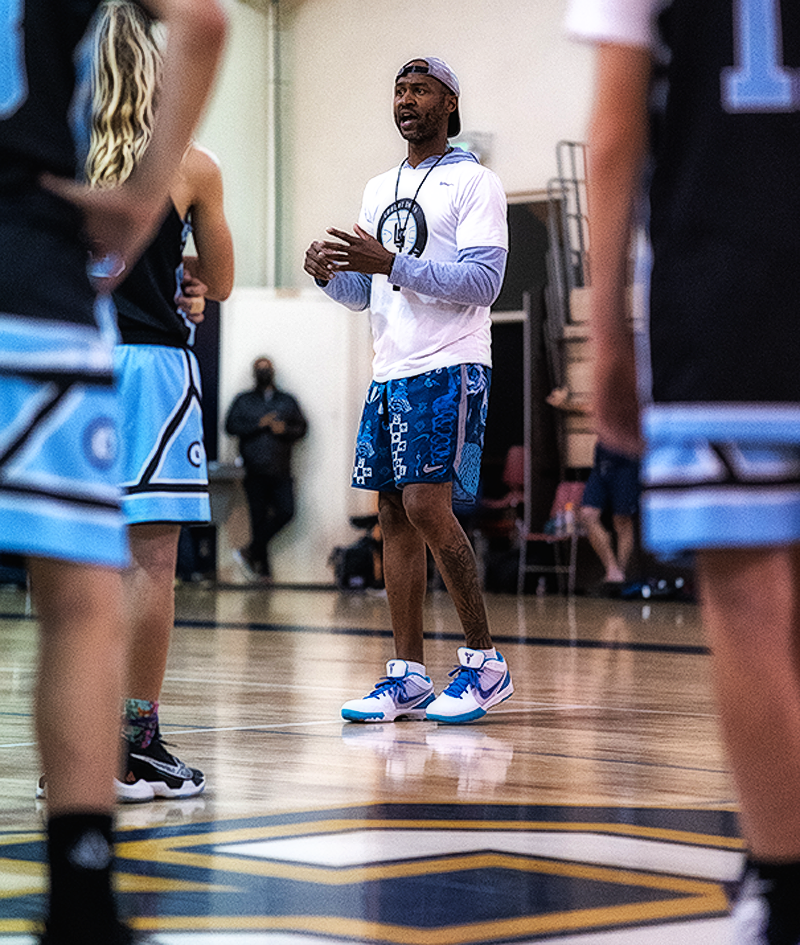
San Diego has always had the raw ingredients for strong youth basketball. The weather allows year-round training. The region pulls families from different basketball cultures, from Southern California playground styles to military families who have lived all over the country. Local high school programs have improved. Private skill trainers have multiplied. College basketball is close enough to feel real, not distant. Put all of that together, and it is no surprise that competitive club basketball has grown from a niche pursuit into a central part of the development path for serious young players.
That growth has changed the local sports landscape in ways that are easy to see if you have spent time around gyms in Mission Valley, Chula Vista, Carlsbad, La Jolla, or East County over the last decade. What used to be a smaller network of travel teams and weekend tournaments has become a structured ecosystem. Families now compare programs by coaching philosophy, tournament schedule, strength training options, film access, recruiting connections, and long-term fit. Players who once relied mainly on school ball now often build their identity around a club team first.
The rise of Basketball Club Teams San Diego families now consider has not happened by accident. It has been driven by demand, but also by a shift in how players develop, how coaches evaluate talent, and how parents think about opportunity.
Why club basketball has become the serious track
At one time, many players could get most of what they needed from school practices, summer league, and pickup runs. That is still enough for some athletes, especially those playing for enjoyment or general fitness. But for players aiming to make varsity early, crack a strong high school rotation, or eventually attract college interest, the training volume and competition level available through club teams can be hard to match.
Club teams give players repeated exposure to opponents who are similarly committed. That matters. A guard improves differently when every weekend she faces ball pressure from athletic defenders who force reads at full speed. A big develops faster when he has to carve out position against players with size and timing, not just height. Repetition at the right competitive level sharpens habits. It also reveals weaknesses that casual play can hide.
The calendar is another major factor. School seasons are relatively short and tightly regulated. Club basketball fills the gaps. Players can compete in spring and summer, train in fall, and stay connected to structured development across most of the year. That continuity has value when it is managed well. A player who spends ten months annually in quality skill work, team concepts, and meaningful games will usually progress more than one who ramps up only for a school season.
There is also the visibility factor. College coaches, especially at the Division II, Division III, NAIA, and junior college levels, often rely on club events to evaluate multiple prospects efficiently. Even for players not chasing scholarship dreams, club basketball can open doors to prep schools, academies, and stronger high school roles. Exposure is often discussed too loosely, but it is real when matched with the right level of play and realistic expectations.
San Diego is built for this model
San Diego offers conditions that make the club model especially durable. Geography helps. The county is large enough to support multiple strong programs, yet connected enough that regional competition stays active. A team can build a schedule with local training during the week, Southern California tournaments on weekends, and occasional travel for higher-level events without the logistical strain faced in more isolated markets.
Weather matters more than people admit. Year-round access to courts, outdoor conditioning, beach training, and consistent travel plans creates an advantage. It is easier to keep momentum when canceled sessions are rare and players can stay active between formal workouts.
The region’s demographics matter too. San Diego families invest heavily in youth sports, and many are willing to commit time, travel, and money if they believe the environment is worthwhile. That creates demand for better coaching and better infrastructure. It also raises standards. Programs cannot survive long on uniforms and social media alone. Families talk. Players compare experiences. A club that does not develop athletes or communicate clearly tends to get exposed quickly.
Another factor is the rising quality of local basketball knowledge. Ten years ago, some club environments leaned heavily on energy and tournament volume, without enough attention to teaching. That still exists in spots, but many of the stronger Basketball Club Teams San Diego now supports are run by coaches who understand player development in layers. They teach footwork, decision-making, spacing, defensive reads, and role definition, not just set plays and motivational slogans. That shift has elevated the scene.
What parents and players are really looking for now
The modern basketball family is more informed than it used to be. Parents ask sharper questions. Players watch college film, NBA breakdowns, and skill development clips online. They notice whether a coach can actually teach or just talk. They pay attention to whether a team has structure, accountability, and purpose.
Most families are not simply shopping for the team that wins the most local tournaments. They are trying to answer a more complicated question: where will this player get better, stay challenged, and still enjoy the game enough to keep going?
That last part matters. One of the trade-offs in competitive club basketball is intensity. Done well, it builds discipline and confidence. Done poorly, it burns out players before high school is half over. San Diego has enough options now that fit matters more than branding. A tough, high-volume program may be perfect for a self-driven sophomore with college aspirations. That same environment may overwhelm a talented middle school player still learning to love competition. The strongest programs understand those differences and place athletes accordingly.
Families also care more about transparency. They want to know how many tournaments are on the schedule, how playing time is handled, what happens if a player misses for school obligations, and whether https://dominickadug174.timeforchangecounselling.com/basketball-club-teams-san-diego-focused-on-defense-offense-and-iq the coach values development over short-term results. Those are smart questions because club basketball can look polished from the outside while still being disorganized underneath.
The coaching gap has become the deciding factor
If there is one reason some club programs separate themselves from the pack, it is coaching quality. Not charisma. Not branding. Teaching.
A good club coach knows how to balance individual growth with team function. That sounds obvious, but it is where many programs fail. Some teams overemphasize systems and sacrifice player development for weekend wins. Others claim to be development-focused but never teach structure, which leaves players with flashy workouts and limited game understanding.
The best coaches do both. They correct details that matter in real possessions. A wing learns not just how to attack a closeout, but which foot initiates the move, where the help defender sits, and when the skip pass is the right read. A point guard is taught pace, clock awareness, and how to organize teammates under pressure. A post player works on screening angles, rim runs, and defensive positioning, not just back-to-the-basket moves that rarely show up in modern games.
San Diego’s stronger clubs increasingly hire coaches with real game experience, whether from college, high school, international play, or long years in local gyms. Experience alone is not enough, of course. Some former players cannot teach. But when experience pairs with communication and preparation, players feel the difference quickly. Practices are cleaner. Feedback is more specific. Improvement becomes visible within weeks, not just promised over months.
Development has become more specialized
Another reason competitive club teams have gained ground is that the development model itself has matured. Ten years ago, many players got similar instruction regardless of position, age, or physical maturity. Now, stronger programs are much more nuanced.
Younger players need different things than older ones. A sixth grader may need coordination, confidence, and basic spacing habits more than advanced offensive concepts. A ninth grader entering varsity competition may need physicality, defensive versatility, and faster decision-making. A college-level prospect often needs role refinement. What does this player do well enough to help a team at the next level, and what must improve to make that skill usable against stronger athletes?
The rise of performance training has influenced basketball clubs too. Strength work, mobility, recovery, nutrition guidance, and movement screening are now part of many serious programs. That can be helpful, provided it stays age-appropriate. Not every 12-year-old needs a performance package. Not every high school player needs heavy lifting year-round. Good clubs understand progression. They build athleticism without rushing bodies that are still growing.
Film has also changed player development. Even basic video review helps athletes see patterns they miss in real time. A player may feel active defensively, then watch film and realize he dies on every second off-ball screen. A scorer may think she had a poor game because shots missed, while film shows she created quality looks and made better reads than before. Used well, film keeps development honest.
The tournament circuit has raised both opportunity and pressure
Weekend tournaments are part of the appeal and part of the problem in club basketball. The appeal is obvious. Players get game reps, pressure possessions, and varied competition. They learn how to handle back-to-back games, unfamiliar opponents, and different officiating styles. Those are useful experiences.
But the tournament model can also distort priorities. Too many games, too little practice, and too much travel can create the illusion of progress without enough actual skill growth. I have seen teams play five games in a weekend and come away with plenty of excitement but very little learning. Fatigue sets in, decision-making slips, and bad habits repeat.
The better Basketball Club Teams San Diego offers have become more selective. They do not chase every event. They try to match tournament level with roster level. They leave space for training. That takes restraint because families often equate a packed schedule with value. In reality, a player might gain more from three well-run practices and two meaningful tournament games than from an overstuffed month spent living in gyms and hotel hallways.
There is also social pressure around tournaments. Rankings, social media clips, and highlight culture can push players toward performance instead of development. A guard may hunt step-back threes for the camera instead of making the right pass. A player returning from injury may rush back for a showcase weekend that is not worth the setback risk. Experienced coaches push against that. They remind players that long-term growth usually looks less dramatic than internet basketball.
The economics are real, and not always comfortable
Any honest discussion of club basketball has to address cost. Competitive teams require fees, uniforms, travel, tournament entry, and often additional training. For some families, that is manageable. For others, it creates real strain. San Diego is not a cheap place to live, and club basketball can quickly become one more major line item in a household budget.
This has created a tension in the local scene. On one hand, the level of play has improved because programs have invested in better facilities, staff, and scheduling. On the other, rising costs can limit access for talented players who do not have the same financial cushion. Some clubs work hard to bridge that gap through sponsorships, flexible payment plans, or reduced fees for certain athletes. Those efforts matter. So does honesty. A family should know exactly what they are paying for and what is extra.
Money also affects expectations. When parents make a serious investment, they naturally want to see return. Sometimes that leads to useful accountability. Sometimes it leads to conflict over playing time, role, or recruiting promises. The healthiest programs establish boundaries early. Fees pay for membership in the team environment, coaching, administration, and competition access. They do not buy status.
How players benefit when the fit is right
When a player lands in the right club environment, the gains go beyond basketball skill. Competitive team settings teach punctuality, communication, resilience, and role acceptance. They expose players to teammates from different schools, neighborhoods, and backgrounds. That can be a quiet but important advantage in San Diego, where social circles are often fragmented by geography.
A player may enter a club season as the primary scorer on a local rec team and learn what it means to defend, rebound, and move without the ball. Another may discover she can lead vocally, not just by example. A talented athlete may finally realize that talent alone is not enough when everyone on the court was the best player somewhere else.
Those lessons are not always comfortable in the moment. Sitting behind a stronger upperclassman can sting. Getting pressed into turnovers by better guards can shake confidence. Being told to simplify instead of freelance can feel limiting. Yet those are often the points where real growth starts. Good coaches frame those moments correctly. They do not humiliate players, and they do not protect them from every hard truth.
What families should watch for before committing
The growth in San Diego’s club basketball scene has produced excellent options, but it has also created noise. Not every polished website reflects a solid program. Not every loud sideline reflects quality coaching. Families usually make better decisions when they observe carefully before joining.
A useful evaluation starts with practice. Watch how the coach teaches. Are corrections specific? Is there structure? Do players stand around for long stretches? Does the team work on game-relevant situations or spend too much time on drills that look impressive but transfer poorly?
Then watch the bench during games. A healthy competitive environment has energy, but also accountability and clarity. Players should know what the staff values. If every mistake leads to chaos, or if only top scorers receive instruction, that tells you something.
It also helps to ask current families about communication and consistency. Club basketball runs on logistics as much as inspiration. Schedule changes happen, but chronic disorder wears everyone down.
Where this trend is heading in San Diego
The next phase of growth will likely be less about adding more teams and more about raising standards. San Diego already has enough interest to support a broad club scene. The question now is which programs will prove they can combine development, competition, and sustainability.
I expect to see more specialization by age and level. Younger age groups will continue shifting toward skill foundations and reduced chaos, while high school clubs will become more intentional about exposure, role development, and physical preparation. I also expect stronger collaboration between club coaches, school coaches, and trainers. For years those relationships could be territorial. The best outcomes usually come when adults communicate and keep the player’s bigger picture in view.
There is room for improvement in workload management too. The smartest programs are already rethinking volume. More is not always better, especially for athletes balancing school, strength work, and other sports. San Diego families are becoming sophisticated enough to recognize that.
The rise of Basketball Club Teams San Diego has produced reflects a larger truth about youth sports in the region. Families are no longer looking just for a team. They are looking for a pathway, an environment, and a standard. The clubs that endure will be the ones that understand basketball development as a craft. They will teach well, compete honestly, communicate clearly, and remember that the goal is not simply to win a weekend bracket. It is to help players become stronger, smarter, more resilient athletes over time.
That is why club basketball has taken root so deeply here. San Diego offers the climate, the talent base, the ambition, and now, increasingly, the coaching depth to support it. For the right player in the right setting, a competitive club team can be much more than an extra season. It can be the place where the game starts to make sense.
Lamont Smith Basketball Academy
888 Clairemont Mesa Blvd Suite T-2, San Diego, CA 92123
(619) 639-8778
FAQ About Basketball Club Teams San Diego
How can a player join an LSBA club team?
Players are evaluated during practices so the coaching staff can recommend an appropriate team and development level. Families should contact the academy to confirm current openings and evaluation details.
Are club teams available for newer basketball players?
Yes. LSBA describes multiple levels, including a developmental option for newer players as well as more competitive teams for athletes with prior club experience.
What do LSBA club team practices emphasize?
Practices emphasize basketball fundamentals, team defense, structure, communication, and player development. The specific focus may vary according to the team and experience level.
Do all LSBA teams travel?
Travel expectations vary by level. Some teams focus on local competition, while advanced teams may participate in tournaments elsewhere in Southern California or beyond. Families should confirm the current schedule before enrolling.